

At the 2026 Fuel Ethanol Workshop (FEW), RCM Thermal Kinetics Process Engineer Andrew Cancilla participated in the Innovations in Ethanol Distillation panel discussion, presenting on a common operating issue observed in ethanol distillation, dehydration, and evaporation (DD&E) systems: cold reflux in rectifier columns caused by excessive subcooling in 190-proof condensers.
In many ethanol plants, this is not a major operating issue. However, depending on operating conditions, excessive subcooling can introduce inefficiencies that modestly increase steam demand, reduce effective separation, or limit operating flexibility — particularly when plants are pursuing improved energy performance.
Understanding when and why cold reflux occurs can help ethanol producers better evaluate distillation performance and identify practical opportunities for improvement.
What Happens When a 190-Proof Condenser Is Oversized?
The primary job of a 190-proof condenser is simple: condense overhead vapor.
However, when a condenser provides more cooling than required for condensation alone, an unintended outcome can occur — significant subcooling.
In this case, reflux is cooled below its saturation temperature before returning to the rectifier column. While often manageable, excessive subcooling can impact column performance and energy demand.
Several factors can contribute to condenser oversizing or overperformance, including:
- Excess heat transfer area
- Throughput turndowns
- Lower cooling water temperatures
- Operating pressure changes
- Reflux rate differences
Cooling water temperature often plays an important role. During colder months, reduced cooling water temperatures can increase condenser effectiveness and further lower reflux temperatures.
The Role of Vent Condensers
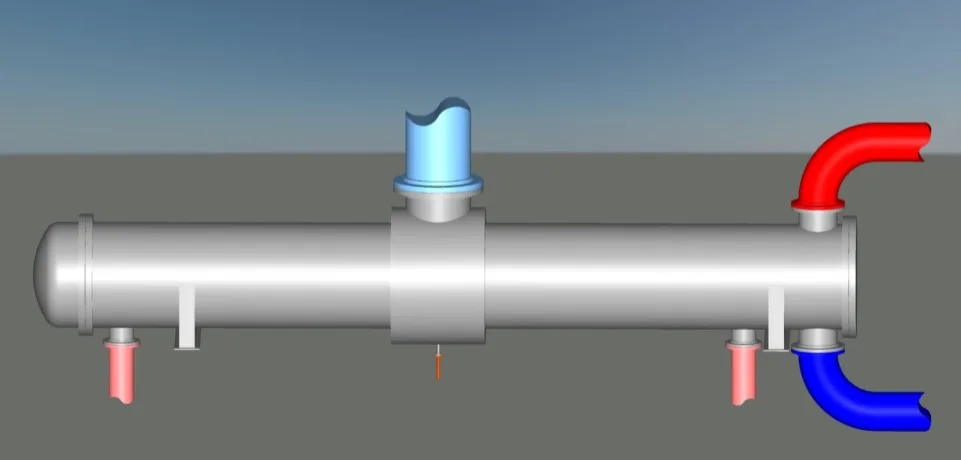
Many fuel ethanol plants also operate vent condensers, which effectively add heat transfer area to the main 190-proof condenser system.
Under colder operating conditions, this additional surface area can further contribute to reflux subcooling and may reduce reflux temperatures by an additional 10°F or more.
While vent condensers play an important role in 200-Proof vapor recovery, understanding their effect on overall condenser performance can be useful when evaluating rectifier operation.
Why Reflux Temperature Matters
Distillation columns generally perform best when reflux enters at or near saturation temperature.
When reflux becomes subcooled, energy removed from overhead vapor must ultimately be restored before effective separation can occur. This means a portion of the column packing is effectively used to reheat reflux rather than contribute to separation.
When reflux is subcooled, steam input must be increased, otherwise ethanol losses will occur in column bottoms. conditions.
Potential Operational Effects of Cold Reflux
Higher Steam Demand
Cold reflux can increase steam demand required to maintain bottoms purity.
For example, 60°F reflux increases side stripper steam demand by approximately 12%. In a hypothetical 60 MMGPY facility, this equates to roughly an additional 1,250 lb/hr of steam, or approximately 7 MMBTU/hr.
Reduced Useful Capacity
Subcooled reflux requires additional vapor traffic to reheat reflux back to saturation.
As vapor traffic increases, useful column capacity may be modestly reduced. In plants operating near hydraulic limitations, this could contribute to throughput constraints.
Increased Pressure Drop
Higher vapor traffic can also increase pressure drop through the column.
While often not severe, increased pressure drop may reduce operating flexibility as facilities push for higher production rates.
CO₂ Effects in 190-Proof Distillate
As reflux temperature decreases, CO₂ solubility in 190-proof distillate increases.
When 190-proof product is later vaporized, dissolved CO₂ is released which interferes with molecular sieve mass transfer and reduce vaporizer performance. While not always a major operating concern, it is one factor worth considering when evaluating dehydration performance.
Reduced Effective Separation Stages
Reheating subcooled reflux consumes active packing height inside the rectifier. Where heat transfer is occurring, separation is not.
In practice, this means excessive subcooling can reduce the number of effective separation stages available within the column.
Practical Ways to Reduce Excessive Subcooling
When excessive subcooling becomes problematic, there are relatively straightforward ways to improve controllability and limit condenser overperformance.
Potential approaches include:
Installing a throttling valve on cooling water discharge
This approach reduces cooling capability of the condenser, though lower velocities through the exchanger may increase tube-side fouling risk.
Adding a cooling water recycle loop
A recycle loop can improve condenser controllability during turndown operation or when cooling water temps are low. This maintains tubeside velocities and limits fouling concerns, though it requires an additional pump.
Both approaches reduce cooling intensity and may help maintain more consistent reflux temperatures.
Small Temperature Changes Can Influence Performance
In many ethanol facilities, cold reflux is a minor issue. However, understanding how reflux temperature interacts with steam demand, vapor traffic, pressure drop, and separation efficiency can help producers better understand DD&E performance.
Small operating changes do not always require major modifications to deliver measurable benefits.
Because every ethanol plant operates differently, evaluating actual operating conditions remains an important part of understanding whether excessive subcooling is simply present, or worth addressing.
If you missed Andrew Cancilla’s FEW presentation, Common Operating Issues in DD&E Distillation Towers, and would like to discuss operating conditions at your facility, the RCM Thermal Kinetics team would welcome the conversation. Give us a call at (716) 264-4913 or contact us to get started.
Download the eBook
Download the companion eBook for a more detailed technical review of cold reflux in ethanol distillation. It expands on the concepts covered in this article with additional process illustrations, engineering graphs, and practical operating considerations for evaluating 190-proof condenser performance.